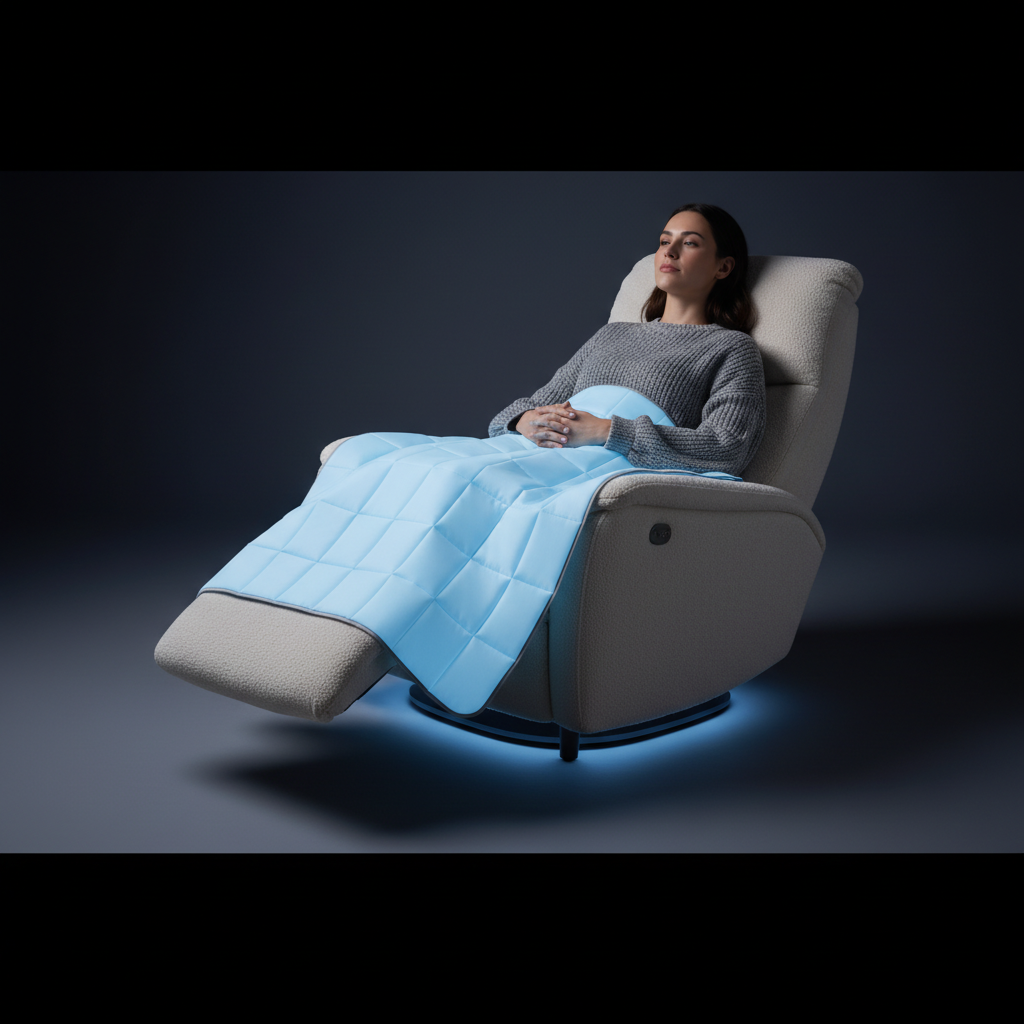
In 40 seconds
Multiple Sclerosis evidence splits cleanly by modality. Clinical rTMS and iTBS have the strongest signal — specifically for spasticity (Mori 2010 iTBS, Korzhova 2019 in SPMS, 2023 meta-analysis SMD −0.67) and neuropathic pain (Lefaucheur 2020 Level A for HF-M1 in neuropathic pain generally). Low-intensity consumer PEMF has a smaller but real signal in MS-fatigue: the 2025 meta-analysis of 7 RCTs (n=327) found a small benefit (SMD −0.23). The 2022 Brazilian RCT (n=44) found no PEMF benefit on fatigue, gait, depression or QoL. NICE NG220 (June 2022) on MS in adults does NOT recommend rTMS or PEMF. The MS Society UK notes there is little robust evidence for magnetic field therapy. NHS England does not commission either for MS. UK access is via clinical trial or private clinic only.
Quick facts
- Best-supported intervention: iTBS or HF-rTMS over M1 for spasticity (Mori 2010, Korzhova 2019)
- Spasticity meta-analysis (2023): rTMS reduced MAS scores with SMD −0.67 across RCTs
- PEMF-fatigue meta-analysis (2025): Small benefit, SMD −0.23 (7 RCTs / n=327)
- Largest negative trial: Brazilian 2022 PEMF RCT (n=44) — null on fatigue, gait, mood, QoL
- NICE NG220 (2022): Does not recommend rTMS or PEMF for MS
- MS Society UK: Notes "dearth of research" for magnetic field therapy in MS
- NHS England: Not commissioned for MS
- Consumer PEMF mat regulatory status: MHRA Class IIa wellness device — not approved for MS treatment
The critical distinction: rTMS vs PEMF vs iTBS
Three different magnetic-stimulation technologies are commonly discussed together. The evidence base, regulatory status and use case are different for each.
Repetitive TMS (rTMS) / iTBS
High-intensity (1-2 Tesla at the coil) clinical device, focal cortical stimulation. iTBS is a shorter, patterned variant. NICE-recognised for treatment-resistant depression only. The technology used in MS spasticity and pain trials (Centonze, Mori, Korzhova).
Low-intensity consumer PEMF
Microtesla-range whole-body mats sold for wellness use. The MS RCTs in this category (Lappin 2003, Mostert 2005, Piatkowski 2009, Afra 2016, Brazilian 2022) are small, mixed and modest. MHRA Class IIa — not approved as MS treatment.
tDCS (transcranial direct current)
Separate technology — low-amplitude direct current via scalp electrodes. Different mechanism. Some MS gait/fatigue evidence but not the focus of this page.
Evidence at a glance — landmark trials
| Study | Year | Population / n | Intervention | Result | Source |
|---|---|---|---|---|---|
| Lappin et al. | 2003 | MS / n=117 | Portable PEMF (Enermed), crossover | Significant fatigue reduction vs sham | PMID 12868251 |
| Mostert & Kesselring | 2005 | MS / n=25 | Santerra mattress PEMF | NULL — 18% vs 7% reduction not significant | Mult Scler |
| Centonze et al. | 2007 | MS spasticity | 5 Hz rTMS, M1 single session | Reduced H/M reflex + spasticity | PMID 17389310 |
| Piatkowski et al. | 2009 | RRMS fatigue / n=37 | BEMER PEMF, 12 weeks | Improved MFIS in active group | JACM |
| Mori et al. (Centonze) | 2010 | MS / n=20 | iTBS, M1, 2 weeks daily | Reduced lower-limb spasticity; H/M normalised | PMID 19863647 |
| Mori et al. | 2011 | MS / n=30 | iTBS + exercise | iTBS primes exercise — largest MAS reduction | J Neurol |
| Afra et al. | 2016 | MS paresthesia | Pulsing magnetic field, RCT | Reduced paresthesia vs placebo | PMID 27556294 |
| Gaede et al. | 2018 | RRMS/SPMS / n=33 | Deep TMS (H-coil), DLPFC+premotor | Safe; trend toward MFIS reduction (underpowered) | Neurol N² |
| Korzhova et al. | 2019 | SPMS / n=34 | HF-rTMS or iTBS, M1, vs sham | Both reduced MAS vs sham; iTBS longer-lasting | Eur J Neurol |
| Lefaucheur et al. (guideline) | 2020 | Cross-indication | Expert update | Level A for HF-M1 in neuropathic pain (relevant to MS) | PMID 31901449 |
| Brazilian RCT | 2022 | RRMS / n=44 | Whole-body PEMF mat, 15-30 Hz, 4 wk | NULL — fatigue, gait, mood, QoL all not significant vs placebo | PMC9594115 |
| 2023 Spasticity meta | 2023 | MS RCTs | rTMS for spasticity | SMD −0.67 favouring rTMS | Mult Scler Relat Disord |
| 2025 PEMF-fatigue meta | 2025 | 7 RCTs / n=327 | PEMF for fatigue | SMD −0.23 (small but significant); no QoL benefit | Mult Scler Relat Disord |
The honest read
Spasticity is where clinical rTMS / iTBS has reproducible signal. Fatigue is where low-intensity PEMF has a small positive aggregate result alongside individual null trials. Everything else — cognition, bladder, mood, gait — has only small pilot evidence. Consumer PEMF mat outcomes outside fatigue are not yet supported by completed phase-3 work.
Sub-symptom breakdown
Spasticity
The strongest-evidence target. Mori 2010 (iTBS, n=20), Korzhova 2019 (SPMS, n=34) and the 2023 meta-analysis (SMD −0.67) all show reduction in Modified Ashworth Scale with M1 stimulation. iTBS shows longer-lasting effects. Effects are real but modest and require maintained protocol. Read the spasticity page →
Fatigue
The most-studied PEMF outcome in MS. The 2025 meta-analysis (7 RCTs, n=327) found SMD −0.23 — a small significant benefit. Lappin 2003 and Piatkowski 2009 were positive; Mostert 2005 and Brazilian 2022 were null. Heterogeneity in devices and protocols complicates the picture. rTMS-fatigue trials are emerging. Read the fatigue page →
Neuropathic pain
Lefaucheur 2020 gives Level A for HF-rTMS over M1 in chronic neuropathic pain generally — the strongest non-condition-specific rTMS recommendation. MS-specific extrapolation is reasonable but trial evidence is limited. Read the MS pain page →
Cognitive impairment
Small pilots (Hulst MBCT-rTMS, Iodice DLPFC trials) show signal on processing speed and attention. No phase-3 RCT. NICE NG220 recommends cognitive rehabilitation and addressing fatigue/depression first. Read the MS cognitive page →
Bladder symptoms
One Houston Methodist 2024 pilot of sacral rTMS for MS neurogenic bladder. Small evidence base. Standard urology pathway remains primary.
Mood / depression
HF-rTMS over left DLPFC is NICE-recommended (IPG542) for treatment-resistant depression generally — applicable to MS-depression by extrapolation. Standard pathway is SSRI ± psychological therapy first.
UK regulatory position — NICE, MHRA, MS Society, NHS England
NICE IPG542 (2015) recommends rTMS for depression with standard clinical-governance arrangements — not for MS.
MS Society UK notes that "there isn't enough good-quality research" to support magnetic field therapy in MS. The Society does not endorse PEMF as a treatment.
MHRA classifies consumer PEMF mats as Class IIa wellness devices. No PEMF device on the UK market holds MHRA approval for an MS indication.
NHS England does not commission rTMS or PEMF for MS. UK access is via clinical trial or private clinic only — clinics are bound by ASA Section 12 standards and cannot legally claim MS efficacy.
Safety and contraindications specific to MS
Seizure threshold
MS itself doesn't markedly raise seizure risk but some MS-related medications (baclofen withdrawal, tricyclics) do. rTMS-induced seizure risk is ~0.1%; iTBS is safer. Discuss with the neurologist.
Implanted devices
Pacemakers, ICDs, spinal cord stimulators, vagus nerve stimulators, cochlear implants — absolute exclusions for both rTMS and PEMF over the relevant area.
Uhthoff phenomenon
MS symptoms transiently worsen with heat. Some PEMF devices generate mild warmth at the application site. Watch for transient symptom flare.
Pregnancy
PEMF over the lumbar spine or pelvis during pregnancy not recommended. Many MS DMTs are also pregnancy-restricted — review with the obstetrician.
Cognitive capacity
Advanced MS with significant cognitive impairment may require best-interests decision-making under the Mental Capacity Act 2005.
Falls risk
Floor-based PEMF mats are a trip hazard in patients with gait disturbance. Bed-based or chair-based application reduces risk.
Practical guidance for UK MS patients
- Optimise disease-modifying therapy. The biggest single intervention in RRMS is appropriate DMT — discuss with the MS neurology consultant.
- Address fatigue systematically. Energy conservation, exercise, treatment of sleep disorders, screening for depression and thyroid function come before considering PEMF.
- For spasticity, follow the NICE pathway. Physiotherapy, baclofen, gabapentin, tizanidine. iTBS is research-trial-only in the UK.
- If considering home PEMF for fatigue, set a clear stop-rule. Try for 4-8 weeks with objective measurement (FSS or MFIS at baseline and end). Stop if no clear benefit.
- Carer wellness use case is legitimate. See our /lower-back-pain and /insomnia-sleep pages.
- Re-review every 6 months. The MS-rTMS evidence base is moving.
Frequently asked questions
Can PEMF reduce MS fatigue?
The 2025 meta-analysis of 7 RCTs (n=327) found a small benefit (SMD −0.23). Individual trials are mixed — Lappin 2003 and Piatkowski 2009 positive; Mostert 2005 and Brazilian 2022 null. The benefit if present is modest.
Does rTMS help MS spasticity?
Yes — this is the strongest MS-rTMS signal. Mori 2010, Korzhova 2019, and the 2023 meta-analysis (SMD −0.67) all show MAS reduction with M1 stimulation, particularly iTBS.
Is rTMS available on the NHS for MS?
No. NHS England commissions rTMS only for treatment-resistant depression in selected trusts. It is not commissioned for MS. UK access for MS is via trial or private clinic.
Does NICE recommend PEMF for MS?
No. NICE NG220 (2022) on MS in adults does not recommend rTMS or PEMF.
Is PEMF safe with my MS medication?
PEMF does not have known pharmacokinetic interactions with disease-modifying therapies or symptomatic medications. Standard implant exclusions apply.
Can a PEMF mat replace baclofen for spasticity?
No. Baclofen and physiotherapy remain first-line. PEMF over the back is not a substitute for medical management of spasticity.
What does the MS Society say about PEMF?
The MS Society UK notes there is little robust evidence for magnetic field therapy in MS. It does not endorse PEMF as a treatment.
Can PEMF help my MS-related cognitive fog?
Small pilots show modest signal with DLPFC rTMS. No phase-3 evidence. NICE recommends cognitive rehabilitation and addressing fatigue/depression first.
How long does a PEMF trial for MS fatigue take?
Trials typically run 4-12 weeks. Set a clear stop-rule: objective fatigue measure (FSS or MFIS) at baseline and end. Stop if no clear benefit.
Will PEMF worsen MS via Uhthoff?
Mild local warmth from some PEMF devices is plausible. If you notice symptom flare with use, stop. Most patients tolerate well.
Is iTBS better than standard rTMS for MS spasticity?
Korzhova 2019 in SPMS suggests iTBS effects last longer than HF-rTMS, but both reduced MAS. iTBS is also faster to deliver and has a lower seizure risk.
Can a UK MS clinic legally claim to treat MS with PEMF?
No. ASA CAP Code Section 12 restricts efficacy claims to those with appropriate licensing. No UK PEMF device is licensed for MS.
Is BEMER PEMF different from a regular PEMF mat?
BEMER is one specific brand of consumer PEMF. The Piatkowski 2009 trial used BEMER. No PEMF brand has MHRA approval for MS treatment.
Can rTMS help MS depression?
Yes — HF-rTMS over left DLPFC is NICE-recommended (IPG542) for treatment-resistant depression generally. Applicable to MS-depression by extrapolation.
What about magnetic resonance therapy (MBST)?
MBST claims have been subject to ASA challenges. No MHRA approval for MS. Treat marketing with caution.
Should I try PEMF before starting DMT?
No. Disease-modifying therapy is the single highest-impact intervention in RRMS. PEMF is not a substitute for DMT.
Can I use a PEMF mat over my spine if I have MS?
Standard implant exclusions apply (spinal cord stimulator etc.). Otherwise generally safe. Pregnancy and active infection are exclusions.
How do I find an MS-rTMS trial in the UK?
ClinicalTrials.gov is the central registry. The UK MS Register, MS Society UK and major MS centres (Queen Square, Plymouth, Cambridge) are the routes. Ask your MS consultant.
Does PEMF help MS bladder symptoms?
One 2024 Houston Methodist pilot of sacral rTMS showed promise. Otherwise the evidence is thin. Standard urology pathway remains primary.
Is the MS Society funding any PEMF research?
Not as a priority area. The MS Society UK has identified DMT research, regeneration, and symptom management as funding priorities. Magnetic field therapy is not currently a focus.
Related pages
Sources
- Lappin MS, et al. Effects of a pulsed electromagnetic therapy on multiple sclerosis fatigue. Altern Ther Health Med, 2003. PMID 12868251
- Mostert S, Kesselring J. Effect of pulsed magnetic field therapy on fatigue in MS. Mult Scler, 2005. PMID 15957511
- Piatkowski J, et al. BEMER magnetic field therapy on fatigue in MS. J Altern Complement Med, 2009. PMID 19422286
- Mori F, et al. Effects of iTBS on spasticity in MS. Eur J Neurol, 2010. PMID 19863647
- Mori F, et al. TMS primes the effects of exercise therapy in MS. J Neurol, 2011. PMID 21286740
- Centonze D, et al. rTMS of motor cortex ameliorates spasticity in MS. Neurology, 2007. PMID 17389310
- Korzhova J, et al. HF-rTMS and iTBS for spasticity in secondary progressive MS. Eur J Neurol, 2019. PMID 30472778
- Afra J, et al. PEMF effects on paresthesia in MS. Clin Neurol Neurosurg, 2016. PMID 27556294
- Gaede G, et al. Deep TMS in MS-related fatigue. Neurol Neuroimmunol Neuroinflamm, 2018.
- Brazilian RCT. PEMF for fatigue, walking, depression, QoL in adults with MS. Braz J Phys Ther, 2022. PMC9594115
- Lefaucheur JP, et al. Evidence-based guidelines on the therapeutic use of rTMS. Clin Neurophysiol, 2020. PMID 31901449
- NICE. NG220 Multiple sclerosis in adults: management. 2022. nice.org.uk/guidance/ng220
- NICE. IPG542 rTMS for depression. 2015. nice.org.uk/guidance/ipg542
- MS Society UK. Position on complementary therapies. mssociety.org.uk
Looking for a PEMF clinic in the UK?
We list every credible PEMF therapy provider in the UK. No UK clinic can legally claim to treat MS with PEMF or rTMS.