In 40 seconds
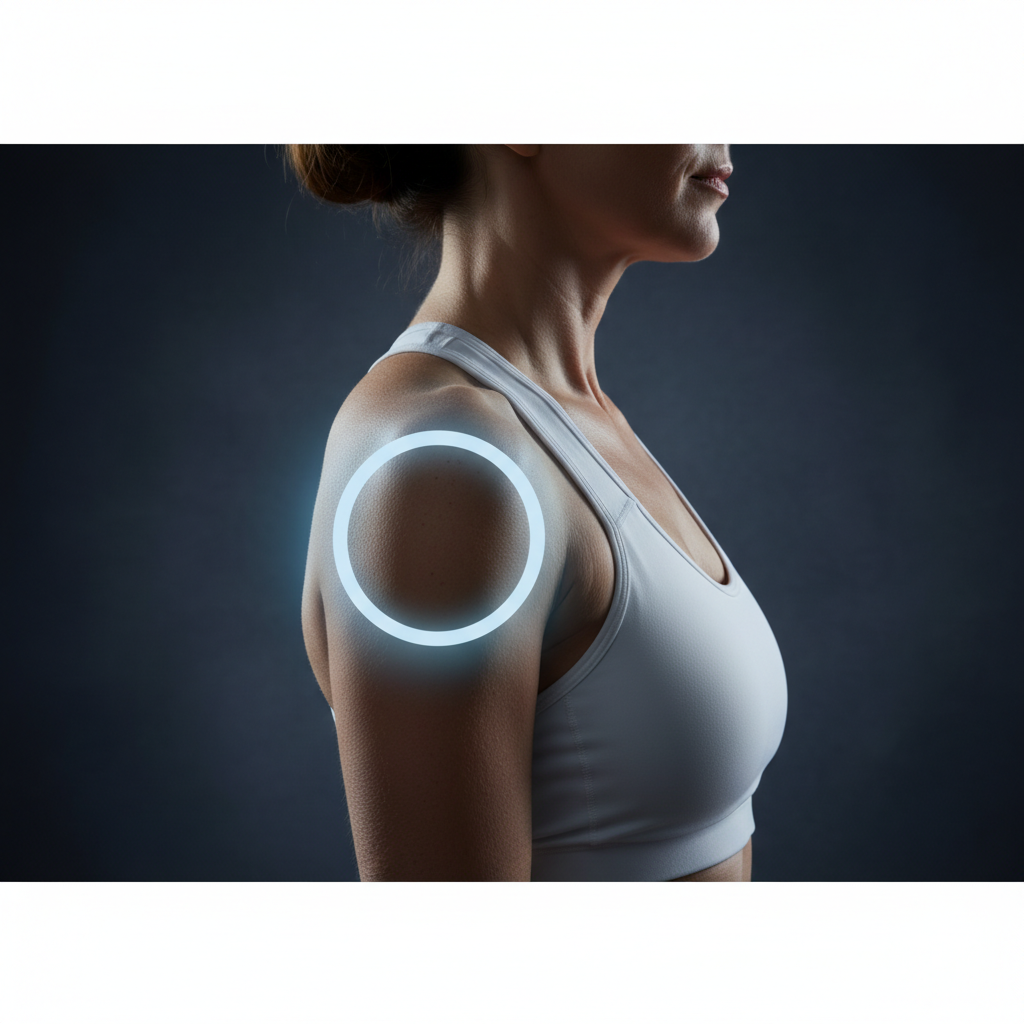
Frozen shoulder (adhesive capsulitis) involves inflammation and fibrosis of the joint capsule, leading to severe stiffness and pain that can last 1–3 years. PEMF therapy reduces capsular inflammation and supports tissue remodelling — most effective when combined with manual therapy, supervised mobilisation, and (where appropriate) hydrodilatation. Typical UK protocols: 2 sessions per week for 8–12 weeks.
Quick facts
- Affects: ~2–5% of UK adults, more common in 40–60s and in diabetes
- Phases: Freezing (3–9 months) → frozen (4–12 months) → thawing (12–24 months)
- PEMF role: Reduces capsular inflammation, supports remodelling
- Best evidence: Hydrodilatation + supervised physiotherapy
- Sessions: 2× per week for 8–12 weeks
- Realistic: Months of work, not weeks
What frozen shoulder actually is
Adhesive capsulitis (frozen shoulder) is inflammation and progressive thickening of the capsule that surrounds the glenohumeral joint. The capsule shrinks and adheres to the head of the humerus, restricting movement in all directions and producing severe pain — particularly at night and on attempted external rotation.
It is more common in women, in people aged 40–60, and significantly more common in people with diabetes (where it can be bilateral and slower to recover).
How PEMF helps frozen shoulder
The biology of frozen shoulder involves chronic low-grade inflammation, capsular fibrosis, and reduced microcirculation in the joint capsule. PEMF acts on each:
- Reduces inflammatory cytokines (IL-6, TNF-α) in the capsular tissue
- Improves microcirculation to chronically inflamed tissue
- Supports fibroblast remodelling rather than continued fibrosis
- Reduces pain enough to allow effective mobilisation work
The "reduces pain enough to allow mobilisation" point is critical. Frozen shoulder needs mobilisation; mobilisation needs pain control.
The evidence
Most published frozen-shoulder evidence focuses on hydrodilatation and physiotherapy as primary interventions. PEMF appears in mixed protocols and is well supported as an adjunct in soft-tissue pain populations more broadly. The 2025 multi-centre clinical trial in Pain and Therapy confirmed PEMF effectiveness across joint and soft-tissue pain.
Source: Pain and Therapy 2025
Typical UK protocol
| Phase | Frequency | Duration | Focus |
|---|---|---|---|
| Freezing | 2–3× per week | 4 weeks | Pain control, gentle ROM |
| Frozen | 2× per week | 4–6 weeks | Combined PEMF + manual mobilisation |
| Thawing | 1× per week | 4–8 weeks | Progressive loading + ROM restoration |
Alongside the rest of your care
PEMF should sit alongside: GP-led pain management, physiotherapy with manual mobilisation, hydrodilatation if pain is severe, sleep positioning advice, and patience. Frozen shoulder takes time. Anyone promising a quick fix is overpromising.
Contraindications
Hard exclusions — do not have PEMF if any apply:
- Pacemaker, implantable cardioverter-defibrillator (ICD), or any cardiac electronic device
- Cochlear implant or other implanted electronic hearing device
- Spinal cord stimulator, deep-brain stimulator, vagus nerve stimulator
- Intrathecal pump or implanted drug pump
- Insulin pump (continuous glucose monitors are usually fine — confirm with the clinic)
- Active infection at the treatment site
- Pregnancy — when treatment would be over the abdomen, lumbar spine, or pelvis
Discuss with your GP or specialist before booking if any apply:
- Active malignancy or recent cancer history (oncologist clearance required)
- History of seizures or epilepsy
- Multiple sclerosis or other neurological condition under specialist care
- Anticoagulant therapy (PEMF itself does not thin blood, but bruising risk if local circulation is already compromised)
- Children under 14 (most UK clinics will not treat under-18s without paediatric specialist input)
- Recent surgery within the last 14 days at the treatment site (confirm with surgeon)
NOT contraindications — these are commonly misunderstood:
- Plates, rods, screws and other passive metal orthopaedic hardware
- Dental implants and dental crowns
- Joint replacements (hip, knee, shoulder)
- IUDs (copper or hormonal)
- Tattoos and piercings (jewellery should be removed for the session)
Specific to this condition: pacemakers, defibrillators, cochlear implants, insulin pumps, active malignancy, pregnancy (over the abdomen), epilepsy without GP clearance.
Frequently asked questions
How long does frozen shoulder take to recover from?
Untreated, frozen shoulder (adhesive capsulitis) typically lasts 1–3 years through three phases: freezing, frozen, and thawing. With active treatment — physiotherapy, PEMF, sometimes injections or hydrodilatation — recovery time can be reduced significantly.
Does PEMF actually help frozen shoulder?
Frozen shoulder involves capsular inflammation and fibrosis, both of which respond to anti-inflammatory and circulation-improving interventions. PEMF reduces inflammation and supports tissue remodelling. Most clinics report best results when PEMF is combined with mobilisation work in the 'frozen' phase.
Should I have a steroid injection or PEMF first?
For severe pain in the freezing/frozen phase, a steroid injection often provides faster pain relief. PEMF is best deployed alongside or after — when the pain has settled enough to start mobilisation work. Hydrodilatation (steroid + saline distension) is the strongest evidence-based intervention; PEMF supports recovery alongside it.
How many sessions for frozen shoulder?
Most clinics deliver 2 sessions per week for 8–12 weeks, sometimes longer. Frozen shoulder takes time — anyone promising a 4-week fix is overpromising.
Can I have PEMF if I have diabetes? (frozen shoulder is more common in diabetes)
Yes. Diabetes is not a contraindication for PEMF. Diabetes-related frozen shoulder can be more stubborn — be patient with the timeline.
Will PEMF restore my range of motion?
PEMF alone won't. Range of motion comes from progressive mobilisation work — manual therapy and supervised stretching. PEMF reduces the inflammation that's blocking that work and accelerates the recovery process.
Looking for a PEMF clinic near you?
We list every credible PEMF therapy provider in the UK so you can find one near home.